T+1 Settlement: What Happens Between Your Trade and Your Money

You sell 200 shares on Tuesday morning and the app immediately shows $9,500 sitting in your account. That afternoon you try to move it to your checking account for a payment due Friday. The transfer gets rejected, or it queues up with a date you didn’t ask for. The money is real, it is yours, and you still cannot touch it — because the trade has executed but not settled.
Settlement is the step where cash and shares actually change hands. In the US, for stocks, it takes one business day after the trade. Sell Tuesday, and the cash is yours to withdraw Wednesday. That’s T+1, and it has been the standard since May 28, 2024.
Execution and settlement are two different events
When you tap sell, your order goes to an exchange or a market maker, finds a buyer, and locks in a price. That takes milliseconds. That moment is the trade date — the “T” in T+1.
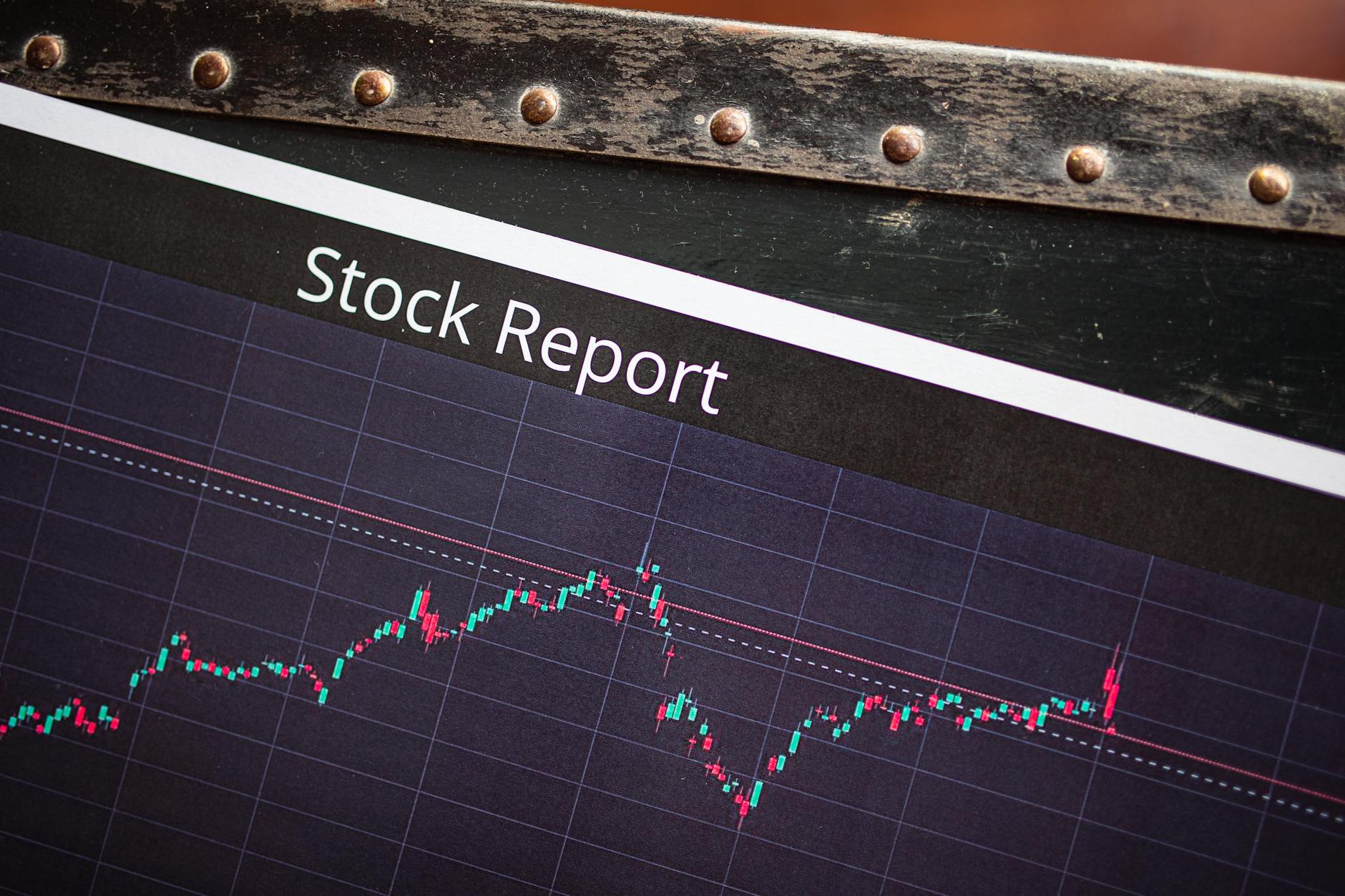
What follows is slower and invisible to you. Your broker reports the trade to a clearing agency, the buy side and sell side are matched and netted against every other trade in the system, and then the actual transfer happens: their money to you, your shares to them. Only at that point is the trade legally final and irreversible. Under the current rule, that lands on the next business day.
So the $9,500 showing in your balance Tuesday afternoon is a promise, not a completed transfer. Your broker knows the sale will almost certainly settle, so it credits you the proceeds and, in most cases, lets you spend them on another security right away. Wiring cash to an outside bank is a different matter. Once that money leaves the broker, it is gone, and the broker has no way to unwind it if settlement fails. So they wait.
Go back to the Tuesday sale. 200 shares at $47.50 is $9,500. Tuesday evening you get a trade confirmation showing that number. Wednesday, settlement completes and the $9,500 becomes settled cash. Wednesday is the first day you can send it to your bank. If your payment is due Friday, you are fine with a day to spare. If you had sold Thursday instead, settlement would be Friday, and depending on when your broker cuts off ACH transfers for the day, the money might not land at your bank until the following week.
Why the SEC cut a day off
The old standard was T+2. The SEC shortened it to T+1 in a rule adopted in February 2023, described in SEC press release 2023-29, with the compliance date set for May 28, 2024.

The reason is counterparty risk. Between execution and settlement, a large amount of money and stock is in transit, obligated but not yet delivered. If a broker or a clearing member fails during that window, someone has to absorb the loss on trades that were agreed but never completed. Clearing agencies protect against this by collecting margin from members, sized to how much could go wrong before settlement. Cut the window in half and you cut the exposure that margin is covering. The full reasoning, along with the SEC’s analysis of the costs and the operational squeeze on affirmation and allocation deadlines, sits in the final rule, Release 34-96930.
None of that is really about you. It is about systemic plumbing. But the side effect lands in your account: you get your money a day sooner than you would have in early 2024, on every sale you make.
Weekends and holidays don’t count
Business days, not calendar days. Sell Friday and settlement is Monday. Sell the Friday before a Monday market holiday and settlement is Tuesday.
This is where people get caught, and it is almost always around a long weekend. Someone sells Friday afternoon expecting cash Saturday, discovers markets settle nothing over a weekend, then discovers Monday is a holiday too. The rent was due Monday. There is no expedite button — settlement is a clearing process on a calendar, not a customer service queue.
Check the market holiday calendar before you plan a withdrawal around a specific date. It costs you thirty seconds.
The good faith violation, and how it actually happens
Everything above is inconvenience. This part can freeze your account.
In a cash account — not a margin account — you are required to pay for purchases with settled funds. Brokers extend a courtesy: they let you buy with the proceeds of a sale before those proceeds settle, on the good-faith assumption that the sale will settle normally. The violation happens when you sell the new position before the money that paid for it has settled. At that point you have sold something you never actually paid for.
Follow the same $9,500 through it.
Tuesday, you sell 200 shares at $47.50 and take in $9,500 of unsettled proceeds. Tuesday, still, you buy 250 shares of something else at $38.00 — exactly $9,500. That purchase is fine, and brokers process it thousands of times a day. Then, Tuesday afternoon, the new position runs up to $38.60 and you sell it for $9,650.
That last sale is the violation. The cash that bought those 250 shares wasn’t settled and wouldn’t be until Wednesday. You sold a position you funded with money you didn’t yet have.
Change one thing and the problem disappears. Hold the 250 shares overnight and sell Wednesday at $38.60. Wednesday is when the original $9,500 settles, so the shares were paid for with settled funds by the time you closed the position. Same trades, same profit of $150, no violation. The entire difference is one calendar day.
FINRA requires brokers to track these. The typical enforcement pattern is a warning for the first one or two, and after the third in a rolling twelve-month period many firms restrict the account to settled-cash-only trading for 90 days. Restricted means what it sounds like: you can buy only with cash that has fully cleared, so a sale on Tuesday buys you nothing until Wednesday. For someone trading actively in a cash account, that is close to being benched. The exact warning-to-restriction ladder varies by firm, so the threshold at your broker may differ from the one down the street.
Here is the week laid out, since the settled-versus-unsettled distinction is easier to see side by side than to hold in your head:
| Day | Action | Settled cash | Unsettled | Status |
|---|---|---|---|---|
| Mon | Start of week | $10,000 | — | Clean |
| Tue | Sell 200 @ $47.50 | $10,000 | +$9,500 | Proceeds settle Wednesday |
| Tue | Buy 250 @ $38.00 | −$9,500 committed | — | Allowed |
| Tue | Sell those 250 @ $38.60 | — | +$9,650 | Good faith violation |
| Wed | Sell those 250 @ $38.60 instead | Original $9,500 now settled | +$9,650 | No violation |
The rule has nothing to do with whether you made money. You can trip it on a losing trade just as easily.
Does T+1 make this trap smaller?
Somewhat. Unsettled cash clears in one day rather than two, so the window in which you can stumble is half as long as it was before May 2024. Under T+2, buying with Tuesday’s proceeds meant waiting until Thursday to sell cleanly. Now it’s Wednesday.
The rule itself did not change, and a shorter window is not a closed one. Anyone who buys and sells inside the same session in a cash account can still generate a violation without doing anything unusual — day trading in a cash account is, structurally, a machine for producing them.
Margin accounts work differently. There, purchases are funded by the broker’s extension of credit under Regulation T rather than by settled cash, so unsettled funds don’t create this specific problem. They create other ones, including pattern day trader rules and margin calls, which are outside what this article covers.
What this doesn’t tell you
Mechanics, not strategy. Nothing here says when to sell or what to buy.
It doesn’t tell you which broker has the most forgiving cash-account policy. Those differ, they change without much announcement, and the only reliable source is your own broker’s current disclosure page.
It doesn’t cover margin accounts, where Regulation T and buying power rules replace most of what’s described above.
It doesn’t cover options, futures, or bonds. Options clear through the Options Clearing Corporation on a separate process, and other instruments run on their own cycles.
It covers US equities only. Other markets have their own settlement conventions and their own timelines for changing them.
One genuinely uncertain thing: the SEC’s rule sets the standard cycle, but the practical experience of a specific transfer — when ACH clears, when a wire posts, whether your broker holds new deposits — depends on your broker’s internal policy layered on top of settlement. T+1 tells you when the cash becomes withdrawable. It does not tell you when it arrives at your bank.
FAQ
What does T+1 mean exactly?
Trade date plus one business day. T is the day your order executes; settlement completes the next business day. A Tuesday trade settles Wednesday, a Friday trade settles Monday, and holidays push it further out.
Why can I trade with the money but not withdraw it?
Because the two risks are different. If you buy another security with unsettled proceeds and something goes wrong, the position is still at the broker and can be unwound. If you wire the cash to an outside bank, the broker has no way to claw it back, so they wait for settlement to finish first.
How long until money from a stock sale hits my bank account?
Settlement makes it withdrawable one business day after the sale. The transfer itself takes additional time depending on the method — ACH commonly runs one to three business days, wires usually same day if you make the cutoff. Add settlement plus transfer time, not just one or the other.
What happens if I get a good faith violation?
Most brokers send a warning notice for the first one or two. After a third within a rolling twelve months, many restrict the account to settled-cash-only trading for about 90 days, meaning every purchase must be funded with fully cleared cash. Policies differ by firm, so check your broker’s disclosure for the exact thresholds.
Did T+1 replace T+2 for everything?
For US equities, corporate bonds, municipal bonds, and unit investment trusts, effective May 28, 2024. Products outside that set can settle on other schedules. If you hold anything unusual, confirm with your broker rather than assuming.
Can I avoid all this by using a margin account?
Margin accounts don’t have good faith violations, because purchases are funded by broker credit rather than settled cash. They introduce different constraints instead — margin maintenance requirements, interest on borrowed funds, and pattern day trader rules if you trade frequently enough. It’s a trade of one rule set for another, not an escape.
Does settlement affect my dividend or my cost basis date?
Settlement determines legal ownership, which is what matters for record dates on dividends and corporate actions. For tax purposes, US equity gains and losses are generally recorded on the trade date, not the settlement date. The two dates serve different purposes and are easy to confuse when they fall in different months or different years.
This article is general information, not financial advice. See our disclaimer.
Also worth reading: Ex-Dividend Date: Why the Stock Price Drops by (Roughly) the Dividend
Also worth reading: Rule 10b5-1 Trading Plans: What Insiders Are Actually Allowed to Do
Sources
Related articles
- Good-Til-Cancelled vs Day Orders: What Happens When the Order Type Expires Work out exactly when your resting order dies, how many trading days a GTC survives, and what 60-day and 90-day broker caps cost you in re-entries.
- Ex-Dividend Date: Why the Stock Price Drops by (Roughly) the Dividend Work out why a $0.90 dividend knocks about $0.90 off the open, why your account value barely moves, and what taxes do to the gap.
- Rule 10b5-1 Trading Plans: What Insiders Are Actually Allowed to Do Learn how 10b5-1 plans let insiders pre-schedule stock sales, what the 90-day cooling-off means, and the 2022 rules that tightened the safe harbor.