Category: Trading

  • Market Order vs Limit Order: When Each One Loses You Money

    Market Order vs Limit Order: When Each One Loses You Money

    You placed a trade, got a fill, and the number on your screen was not what you expected. Or you set a price, walked away, and came back to find the market moved without touching your order. Both outcomes have names, and understanding the mechanics behind them is the difference between an order type working for you and working against you.

    How the Two Order Types Actually Work

    A market order says: fill me now, at whatever the current price is. Speed is guaranteed. Price is not.

    A limit order says: fill me only at this price or better. Price is capped. Execution is not guaranteed.

    Neither is strictly better. Each carries a specific type of risk, and the right choice depends on what you are trading and how urgently you need to be in or out.
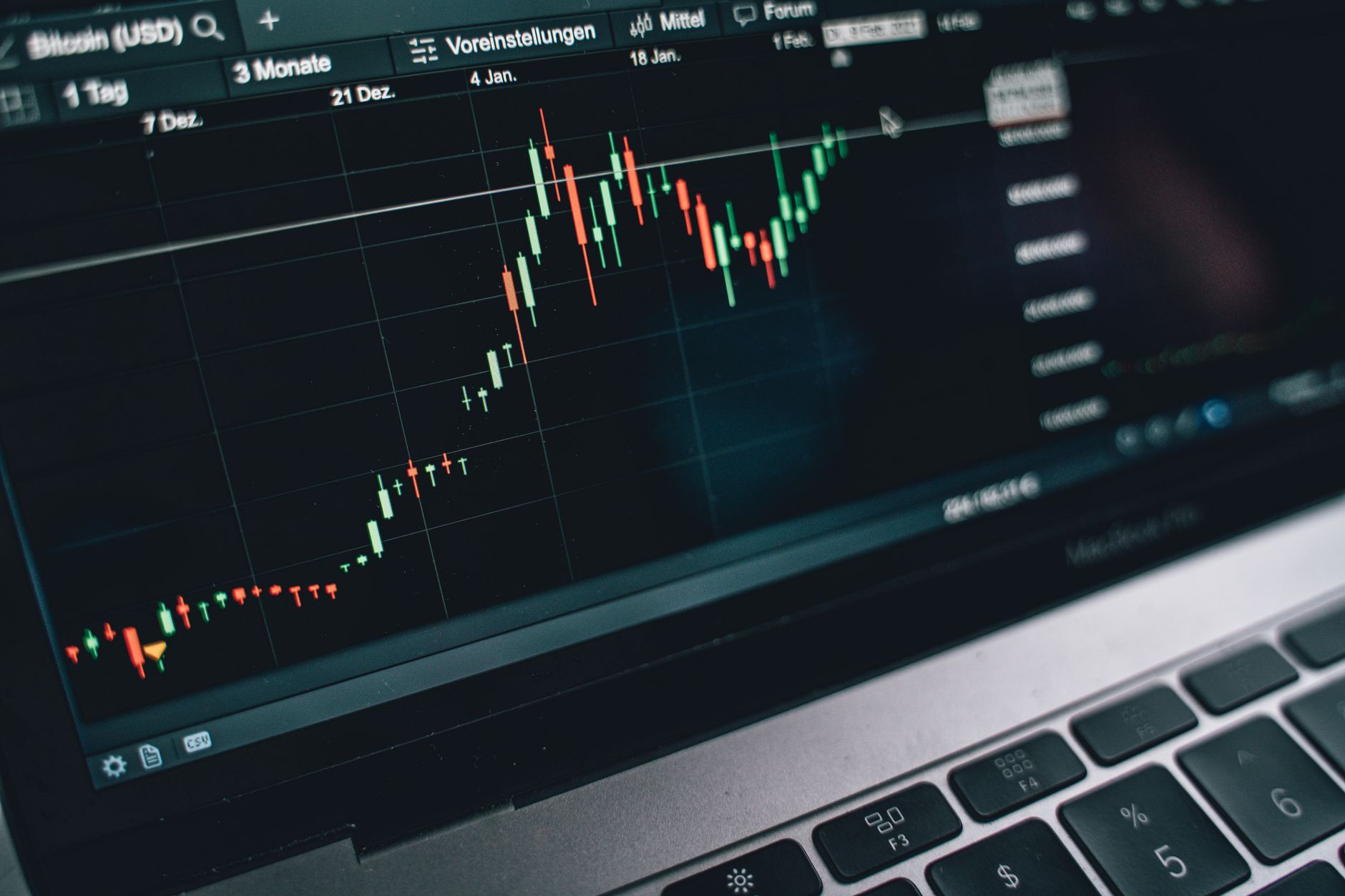
    Close-up of a computer screen displaying cryptocurrency market trends and data.
    Photo: Alesia Kozik / Pexels

    The Bid-Ask Spread: Where Market Orders Bleed

    Every tradable security has two prices at any given moment: the bid (the highest price a buyer is currently willing to pay) and the ask (the lowest price a seller is currently willing to accept). The gap between them is the spread.

    When you send a market order to buy, you get filled at the ask. When you sell, you get filled at the bid. You are always on the unfavorable side of that gap.

    Illustration: A Wide-Spread Stock

    Assume a stock is quoted with a bid of $9.95 and an ask of $10.05. The spread is $0.10, or 1% of the mid-price. You place a market order to buy 500 shares and then immediately sell with another market order.

    Action Price Shares Total
    Market buy (filled at ask) $10.05 500 $5,025.00
    Market sell (filled at bid) $9.95 500 $4,975.00
    Round-trip cost from spread alone $50.00

    This is before any commissions and before the underlying price moves at all. The spread is a structural cost baked into every market order.

    For a highly liquid large-cap stock, the spread might be $0.01 on a $100 share, roughly 0.01%. For a thinly traded small-cap or an options contract with low open interest, spreads of 2% to 5% of the mid-price are common. Market orders in thin markets can be quietly expensive.

    Slippage: When the Market Moves Before Your Order Lands

    The spread is predictable. Slippage is not.

    In fast-moving markets, the price you see on your screen and the price you actually receive can differ because the market shifts between the moment you click and the moment your order reaches the matching engine. This is called price slippage, and it compounds on top of the spread.

    Slippage tends to worsen when:

    • Your order size is large relative to the available liquidity at the best price
    • The market is moving quickly (high volatility, news events, the opening and closing minutes of a session)
    • You are trading instruments with thin order books

    A market order placed during the first and last few minutes of a regular trading session often experiences more slippage than the same order placed during a quiet midday period, because the order book is frequently thinner and more erratic at those times.
    Detailed view of a stock report displaying a market performance graph with data trends.
    Photo: RDNE Stock project / Pexels

    Where Limit Orders Fail You

    A limit order solves the spread and slippage problem by capping the price you pay or accept. But it introduces a different risk: non-execution.

    If you set a buy limit at $9.90 and the stock never trades down to $9.90, your order sits unfilled. If the stock instead climbs to $11, you missed the move entirely.

    This is opportunity cost. It does not appear as a loss on a brokerage statement, but it is real.

    Two Ways a Limit Order Goes Unfilled

    1. Price never reaches the limit. The market moves the opposite direction before filling you. You watch from the sideline.

    2. Price touches the limit but the order does not fill. At any given price level, there is a queue. Orders are filled in time priority within each price level. If your order is far back in the queue and the price only briefly touches your limit, the available shares at that level may be exhausted before your order is reached.

    The second scenario is common in fast markets where a price level is visited for only a fraction of a second.

    Comparing the Cost Profiles Side by Side

    Scenario Market Order Limit Order
    Liquid asset, stable price Small, predictable spread cost Likely fills near mid-price
    Liquid asset, fast market Slippage possible; fill guaranteed May not fill at all
    Thin asset, stable price Large spread cost; fills immediately May fill at better price, but slowly
    Thin asset, fast market Large spread plus slippage risk High non-execution risk

    Neither column wins in every row. The cost you prefer to accept depends on how much you need certainty of execution versus certainty of price.
    Close-up of stock market trading screen displaying financial growth and charts.
    Photo: Alesia Kozik / Pexels

    A Common Middle Ground: Limit Near the Mid

    One approach is setting a limit order at or near the current mid-price rather than at the current best ask. This gives up some execution certainty in exchange for avoiding the full spread cost.

    Illustration: Limit Near the Mid

    Using the same quote from earlier: bid $9.95, ask $10.05, mid $10.00.

    You place a buy limit at $10.00. If the ask moves down to meet you, you pay $10.00 instead of $10.05, saving $0.05 per share on 500 shares, or $25.00. If the ask does not come down, you do not fill.

    Order type Fill price Cost on 500 shares Fill guaranteed?
    Market order $10.05 (ask) $5,025.00 Yes
    Limit at mid $10.00 (if reached) $5,000.00 No

    Whether waiting for a fill at the mid is worth the execution risk depends entirely on context. For a liquid instrument in a calm market, waiting a few seconds for the ask to tick down is often realistic. During a fast news-driven move, the $25.00 saving may be trivial compared to missing the fill entirely.


    What This Does Not Tell You

    This article covers the cost mechanics of two basic order types. It does not cover:

    • Stop orders and stop-limit orders, which have their own execution characteristics and additional failure modes in fast markets
    • Order routing, which affects where your order goes and can influence fill quality beyond what the quoted spread implies
    • Dark pools and internalization, where retail orders are frequently filled by market makers rather than directly on a public exchange
    • Time-in-force settings (day, good-till-canceled, immediate-or-cancel, fill-or-kill), which interact with how and when a limit order executes
    • Whether the price you are transacting at is appropriate for the asset in question, which is a separate analysis entirely

    The mechanics described here apply broadly across most exchanges and most asset classes, but specific platforms, products, and market structures differ in the details.


    Frequently Asked Questions

    Does using a limit order always get me a better price than a market order?

    No. A limit order caps the worst price you pay, but it guarantees nothing about execution. If the market moves away from your limit, you may end up with no fill at all. In a market trending strongly against your position, a missed fill is not necessarily better than a fill at a slightly worse price.

    Is slippage the same thing as the bid-ask spread?

    They are related but distinct. The spread is a structural cost present in every market order because you always transact at the ask or the bid, not the mid. Slippage is additional deviation from the expected price caused by market movement and limited order book depth. You can experience slippage even in markets with tight spreads if your order size is large relative to available liquidity at the best price level.

    Are market orders always faster than limit orders?

    Market orders are processed for immediate execution and prioritized for speed. Limit orders wait in the queue until the market reaches your specified price. For most retail trade sizes in liquid markets, however, a limit order placed at or very near the current ask can fill within seconds under calm conditions. The practical speed difference for small orders in liquid instruments is often minimal.

    Do these mechanics apply to cryptocurrency markets the same way they apply to stocks?

    The core mechanics of bids, asks, spreads, and limit-order queues apply to most order-book-based markets, including most cryptocurrency exchanges. Crypto markets frequently exhibit wider spreads, thinner order books, and higher volatility than large-cap equity markets, which tends to make slippage on market orders and non-execution on limit orders more pronounced. Specific exchange rules, fee structures, and available order types vary across platforms.

    Can I use a limit order to sell, not just to buy?

    Yes. A sell limit order sets a minimum price you are willing to accept. You will only sell at that price or higher. If the market does not rise to meet your limit, the order goes unfilled. A sell market order fills immediately at whatever the current bid is.


    What to Look at Next

    If this article was useful, the natural next topics include how stop orders work and where they break down in fast-moving markets, what order routing means for retail traders and how it affects fill quality, and why liquidity conditions differ across asset classes and time of day. Understanding how trading sessions open and close, and why order book depth behaves differently at those times, is also worth examining before placing time-sensitive trades.

    This article is general information, not financial advice. See our disclaimer.
  • What Slippage Actually Costs You (And When It Bites Hardest)

    What Slippage Actually Costs You (And When It Bites Hardest)

    You place a market order for 500 shares. The screen showed $42.10. Your confirmation shows $42.31. Nobody stole from you. The market just moved between the moment you clicked and the moment your order filled. That gap is slippage, and over time it can quietly drain returns in a way that never shows up on a brokerage fee schedule.

    This article explains what causes slippage, how to estimate what it actually costs, and which situations make it worse.

    What Slippage Is

    Slippage is the difference between the price you expected when you placed an order and the price at which the order actually executed.

    It is not a fee. It does not appear as a line item. It is simply the consequence of two things being true at once: prices move continuously, and filling an order takes a nonzero amount of time and supply.

    There are two common flavors:

    Timing slippage happens because there is a gap between when you submit an order and when it reaches the exchange and finds a counterparty. In fast markets, prices can shift in that window even if your order is small.

    Market impact slippage happens because your order itself consumes available supply. If you want to buy 10,000 shares and only 2,000 are offered at the best ask, the remaining 8,000 have to be filled at progressively higher prices.

    Both can happen on the same trade.

    Close-up of a cryptocurrency trading chart displayed on a monitor, showing market trends and analysis.
    Photo: AlphaTradeZone / Pexels

    The Bid-Ask Spread Is the Floor

    Before slippage even enters the picture, there is the spread. The bid is the highest price a buyer will pay right now; the ask is the lowest price a seller will accept. When you buy at market, you pay the ask. When you sell at market, you receive the bid.

    If the bid is $42.00 and the ask is $42.05, the spread is $0.05, or about 0.12%. That is not slippage in the strict sense, but it is a cost of transacting that retail traders often underestimate, especially when they trade frequently.

    Slippage sits on top of this. You pay the spread, and then if conditions are poor, you also pay slippage.

    When Slippage Bites Hardest

    Thin order books

    Every exchange keeps a record of resting limit orders at various price levels, called the order book. A thick book has many orders sitting near the top of each side; a thin book does not. When you send a market order into a thin book, it eats through each price level quickly and you end up with a fill well away from where you started.

    This matters most for:

    • Securities with low average daily volume
    • Assets traded outside their primary market hours (pre-market, after-hours)
    • Cryptocurrency pairs outside the largest tokens
    • Options with wide strikes or distant expirations

    Fast-moving markets

    News releases, earnings announcements, central bank decisions, and geopolitical shocks all cause prices to move faster than normal. Market makers, who typically post the resting orders that give you a place to fill, pull their quotes during these moments because they do not want to be on the wrong side of a sudden gap. The result is a thinner book at exactly the moment when retail traders are most tempted to act quickly.

    Large orders relative to volume

    The standard way to measure this is the ratio of your order size to the average daily volume in that instrument. If you are trying to buy a quantity that equals a meaningful fraction of what trades in a full day, you will move the market against yourself. Institutional traders have entire teams and algorithms dedicated to breaking large orders into small pieces to manage this. Retail traders generally do not face this problem on liquid large-cap stocks, but it can appear quickly in small-cap equities, thin ETFs, or illiquid options.

    Market orders during volatile periods

    A limit order caps the price you pay or receive. A market order does not. It says: fill me now, whatever the price. In calm conditions, that is often fine. In volatile conditions, "whatever the price" can be a costly instruction.

    Close-up of a computer screen displaying cryptocurrency market trends and data.
    Photo: Alesia Kozik / Pexels

    A Worked Example

    The following is an illustration using invented but realistic numbers. Assumptions are stated throughout.

    Setup:

    • You want to buy 1,000 shares of a mid-cap stock.
    • The displayed best ask at the moment you click is $50.00.
    • The spread at that moment is $0.06 (bid $49.94, ask $50.00).
    • The order book shows: 400 shares at $50.00, 300 shares at $50.04, 300 shares at $50.11.
    • You place a market order for all 1,000 shares.

    Fill breakdown:

    Price Level Shares Available Your Fill
    $50.00 400 400 shares
    $50.04 300 300 shares
    $50.11 300 300 shares

    Cost calculation:

    Portion Shares Price Subtotal
    First fill 400 $50.00 $20,000.00
    Second fill 300 $50.04 $15,012.00
    Third fill 300 $50.11 $15,033.00
    Total 1,000 $50,045.00

    Your average fill price: $50.045.
    Your expected price: $50.00.
    Slippage: $0.045 per share, or $45.00 on the full order.
    As a percentage of expected cost: 0.09%.

    That sounds small. But if you make 200 similar round-trip trades in a year, and slippage on each side averages $45, the annual drag is $18,000 on positions of $50,000 each, a 1.8% headwind before any other costs. Frequency amplifies what looks like rounding error on any single trade.

    What This Does Not Tell You

    This analysis assumes a static order book. In reality, the book is dynamic. Between the moment you see a price and the moment your order fills, other orders arrive, existing orders cancel, and market makers reprice. The slippage you actually receive may be better or worse than a snapshot of the book would predict.

    It does not capture hidden orders. Many venues use dark pools or reserve orders that do not show on the visible book. Your fill might actually be better than expected because a large buyer was sitting quietly at $50.00. Or worse, if they have already consumed that liquidity.

    It does not separate venue effects. Order routing decisions, payment for order flow arrangements, and the choice of exchange can all affect fill quality in ways that are hard to observe from the outside. Regulators require brokers to report execution quality statistics, but reading those reports requires understanding their methodology.

    Percentage slippage looks different at different price points. The same $0.045 per share slippage costs more in percentage terms on a $5 stock than on a $500 stock. Comparing slippage across instruments requires normalizing to a common base.

    This does not account for limit order opportunity cost. You can avoid market impact slippage by using limit orders, but then your order may not fill at all, or may fill only partially. Missing a trade has its own cost that is harder to quantify.

    Person analyzes stock data with a smartphone and laptop, indoors.
    Photo: https://kaboompics.com/ / Pexels

    FAQ

    Does slippage always hurt the buyer more than the seller?

    No. Slippage is symmetric in principle. A seller using a market order receives the bid, not the midpoint, and in a fast-moving market the bid can be well below the last printed price. The direction of slippage depends on which way prices move between order submission and fill, and market impact works against both buyers and sellers.

    Is slippage worse on cryptocurrency markets than on stock markets?

    Generally, yes, for a few structural reasons. Crypto markets operate continuously, but liquidity concentrates during certain hours. Many token pairs trade almost exclusively on one or two venues with no consolidated tape. Spreads on smaller tokens can be several percent wide. That said, the most actively traded major tokens on the largest venues can have slippage comparable to a mid-cap stock on a slower trading day.

    Can a broker guarantee me against slippage?

    No broker can guarantee zero slippage on market orders as a general rule. Some brokers advertise "price improvement," meaning they sometimes fill you at a better price than the national best quote. This is real but applies to specific circumstances and does not eliminate slippage in all conditions. Reading your broker's execution quality disclosures carefully tells you more than any marketing claim.

    Does slippage matter less if I am a long-term investor?

    It matters less per trade, but the logic changes depending on your behavior. A buy-and-hold investor placing a handful of large orders per year faces far fewer slippage events than an active trader. However, a single large order in an illiquid instrument can still generate meaningful slippage. Position sizing relative to the liquidity of what you are buying remains worth considering regardless of holding period.

    Why do some traders use limit orders to control slippage?

    A limit order specifies a maximum price you will pay (for a buy) or a minimum price you will accept (for a sell). Because the order only executes at your stated price or better, market impact slippage beyond your limit is impossible by definition. The tradeoff is execution risk: if the market never reaches your price, you do not fill. Traders who use limits are trading slippage risk for opportunity risk.

    What to Look at Next

    If you want to go deeper on the mechanics behind these ideas, the following topics build on what is covered here:

    • Order book mechanics: how bids, asks, and depth of market interact in real time
    • Market microstructure: the academic field that studies how prices form and orders get filled
    • Transaction cost analysis (TCA): the methods institutions use to measure execution quality after the fact
    • Limit vs. market orders: the tradeoffs in more detail, including when each type makes sense structurally

    Understanding slippage will not tell you what to buy or sell. But it gives you a more complete picture of what a trade actually costs.

    This article is general information, not financial advice. See our disclaimer.